
How To Convert Fidelity Cash Management Statement To Excel, CSV, And QBO
Fidelity Cash Management Accounts blend brokerage and checking, with FDIC-insured cash via partner banks. This guide shows how to convert Fidelity PDF statements to Excel, CSV, or QBO using DocuClipper, no manual data entry required.
Fidelity Cash Management Accounts (CMAs) sit alongside Fidelity brokerage accounts and act like a checking account: ATM access, bill pay, debit card, and FDIC insurance through Fidelity's partner banks. Statements arrive as PDFs through the Fidelity portal, and they include both cash transaction activity and any related sweep movements. To use that data in Excel, QuickBooks, or accounting software, you need a conversion step.
DocuClipper's bank statement converter extracts every transaction from Fidelity Cash Management PDFs in seconds, with no manual data entry.
While you are here
Extract holdings and activity from any broker PDF
Upload a brokerage statement from Fidelity, Schwab, Vanguard, Merrill, E*TRADE, or Robinhood and DocuClipper returns structured tables (positions, buys/sells, dividends) ready to export.
Step 1: Upload Fidelity Statement to DocuClipper
Log into your DocuClipper account (or start a free trial) and navigate to Bank and Credit Card Statements.
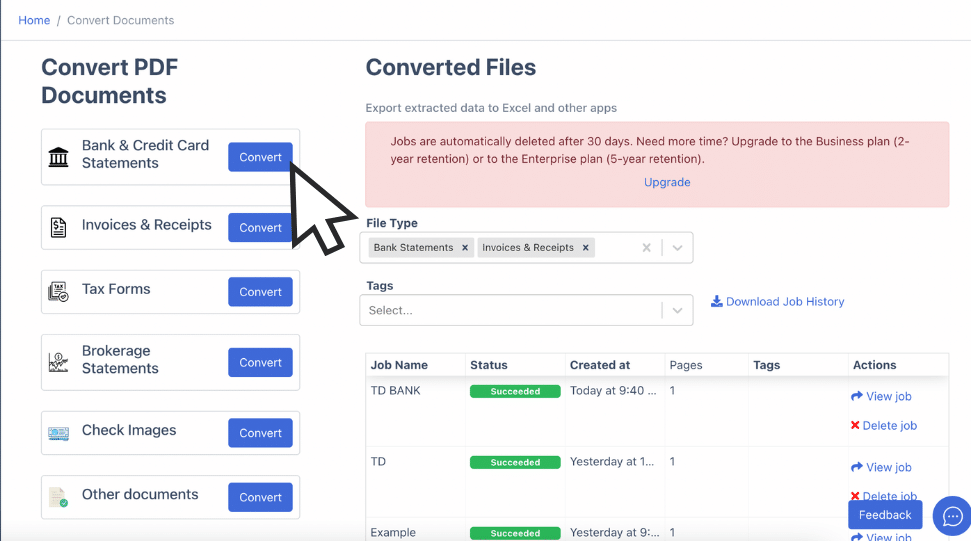
Drag and drop your Fidelity Cash Management PDF statement into the upload area. Fidelity issues machine-generated digital PDFs, which DocuClipper's OCR handles with high accuracy.
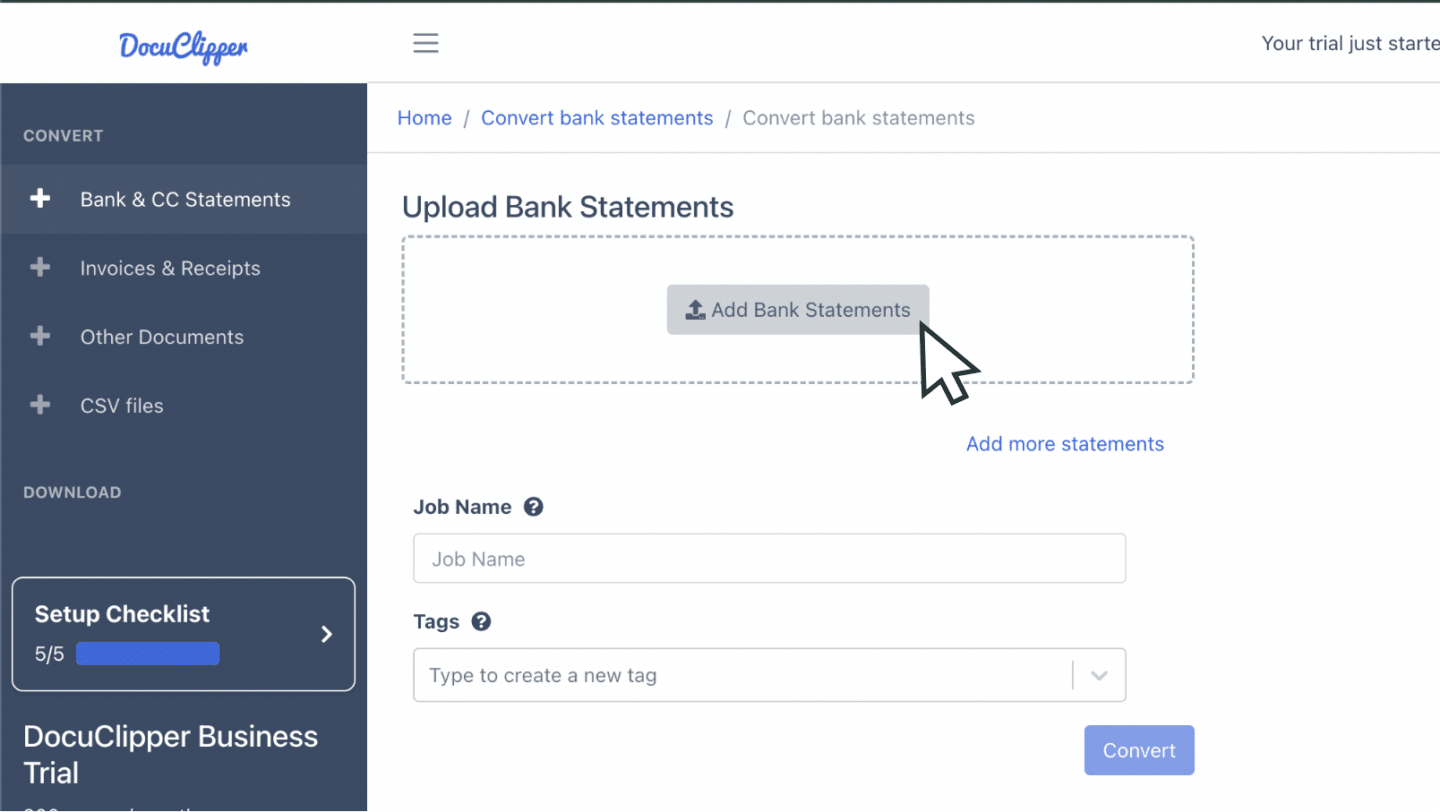
You can also email statements directly to your DocuClipper upload address, useful when clients forward Fidelity PDFs to you.
Step 2: Review Extracted Transactions
After upload, DocuClipper displays the original PDF alongside the extracted spreadsheet. Every transaction row, including dates, descriptions, debits, credits, and running balances, is pulled automatically.
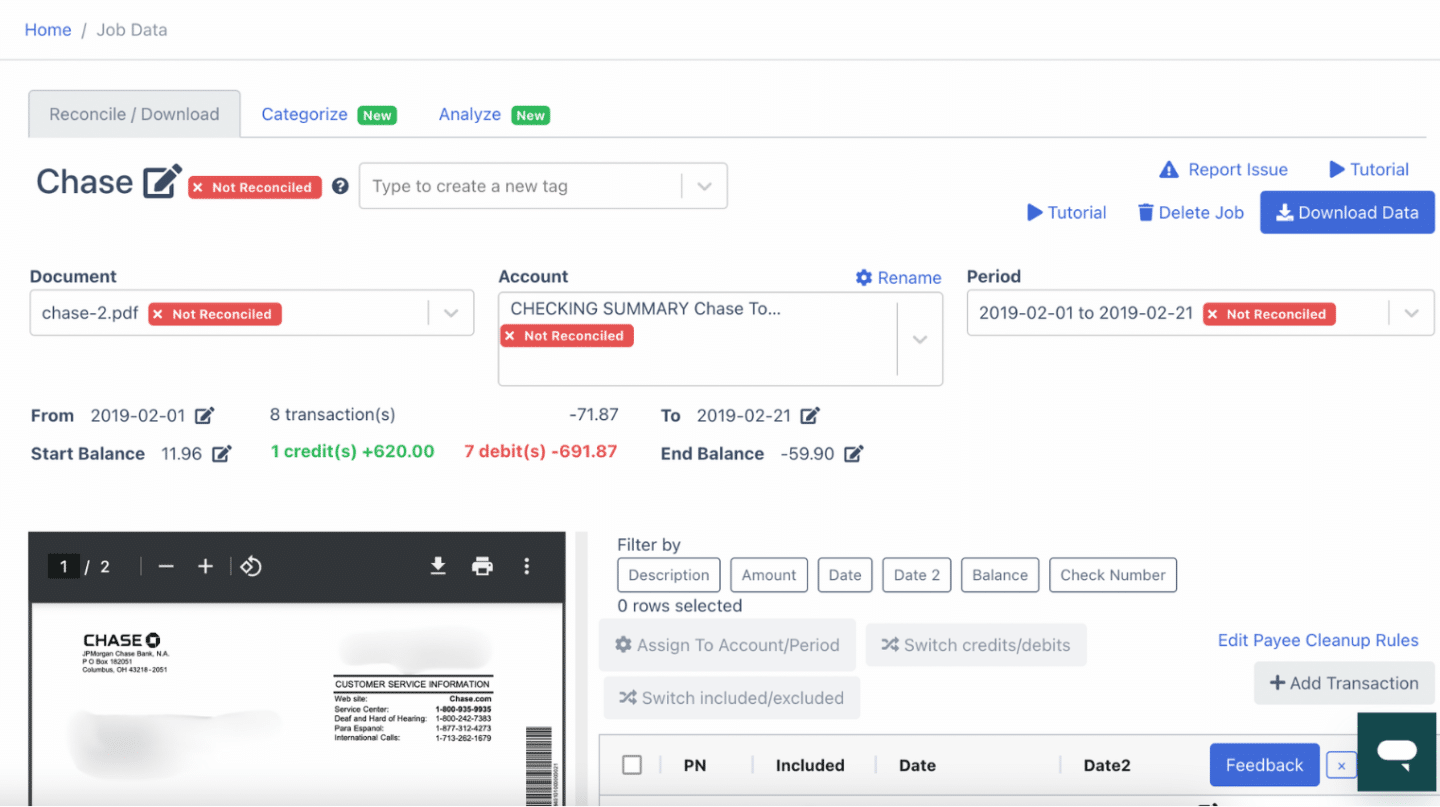
Fidelity statements often combine cash activity with sweep program transactions. Scan the side-by-side view to confirm all rows were captured correctly before exporting.
Step 3: Reconcile the Statement
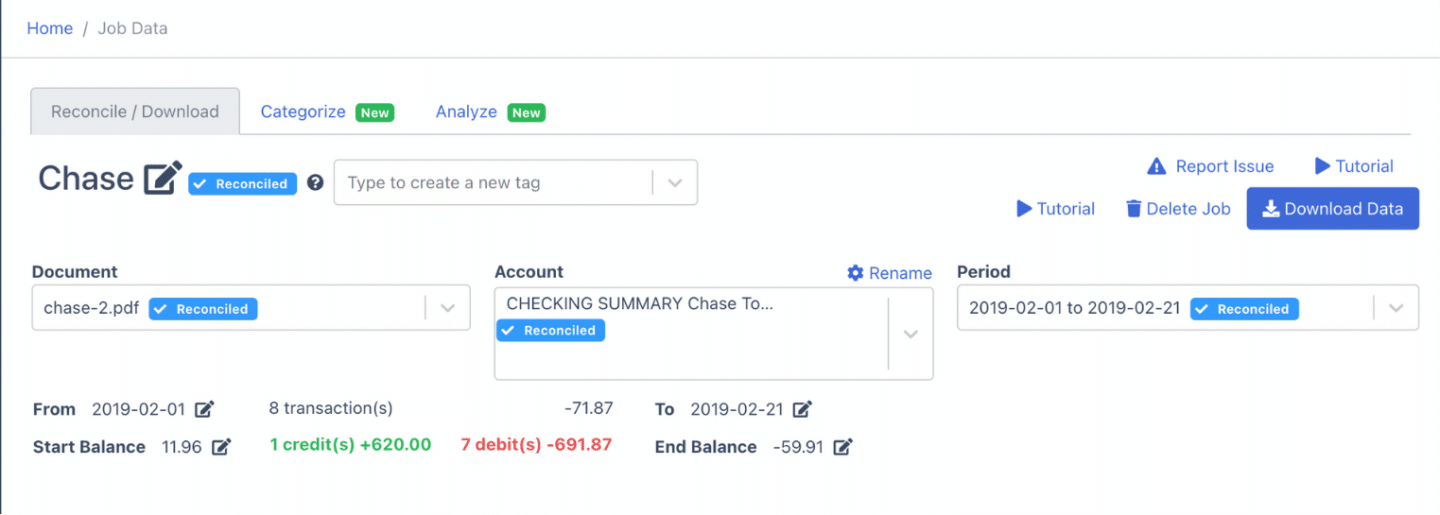
DocuClipper automatically reconciles the statement when you click convert. It compares the sum of extracted transactions against Fidelity's stated opening and closing cash balances.
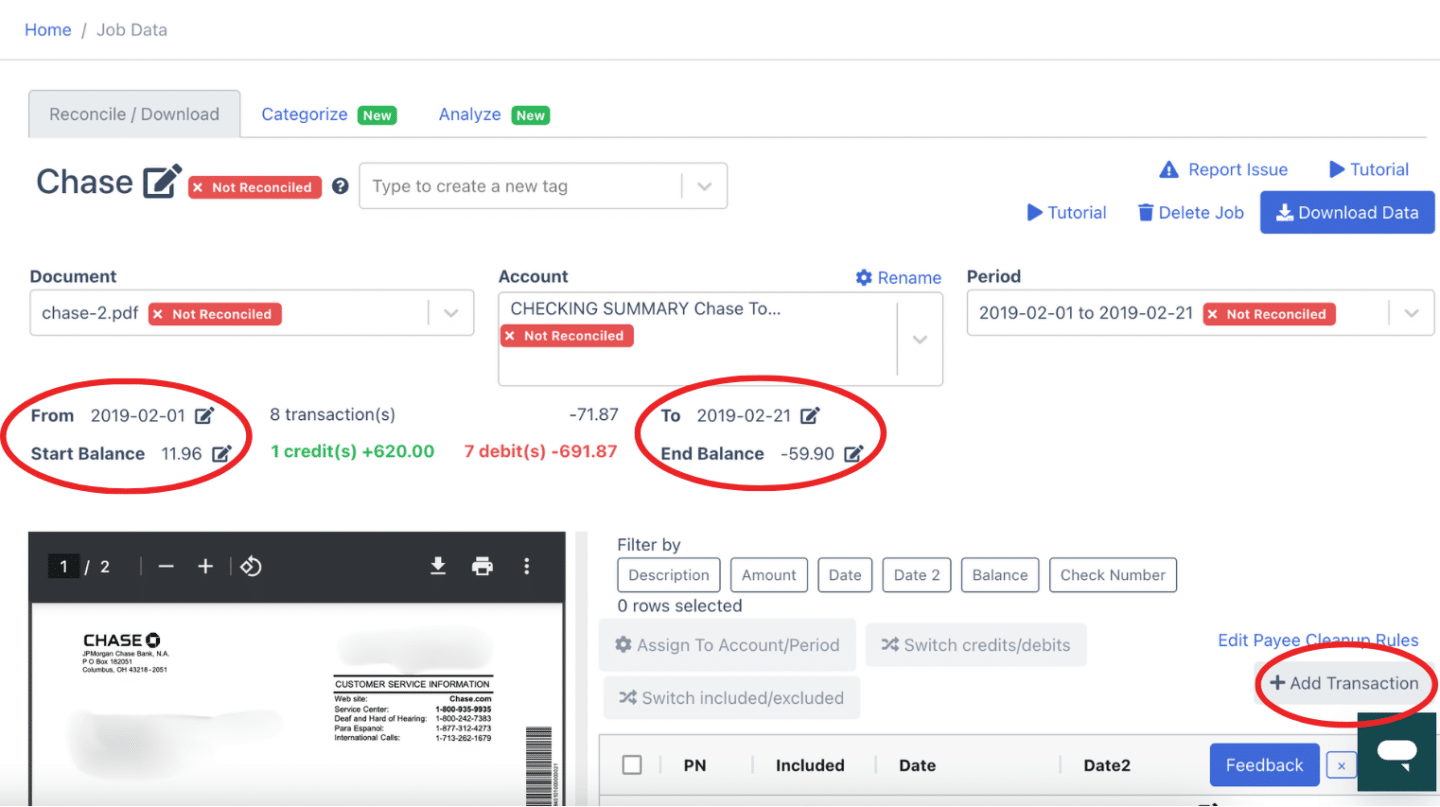
Reconciled statements are marked clearly. If a discrepancy appears, you can add missing transactions or edit figures directly in the dashboard before exporting.
Step 4: Export to Excel, CSV, or QBO
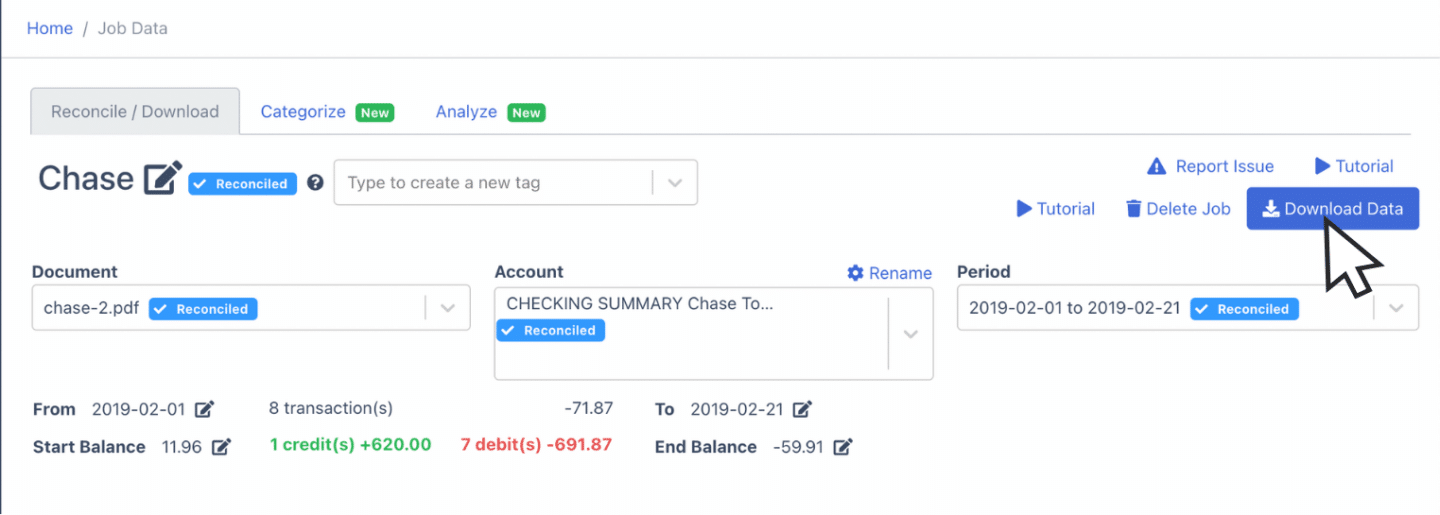
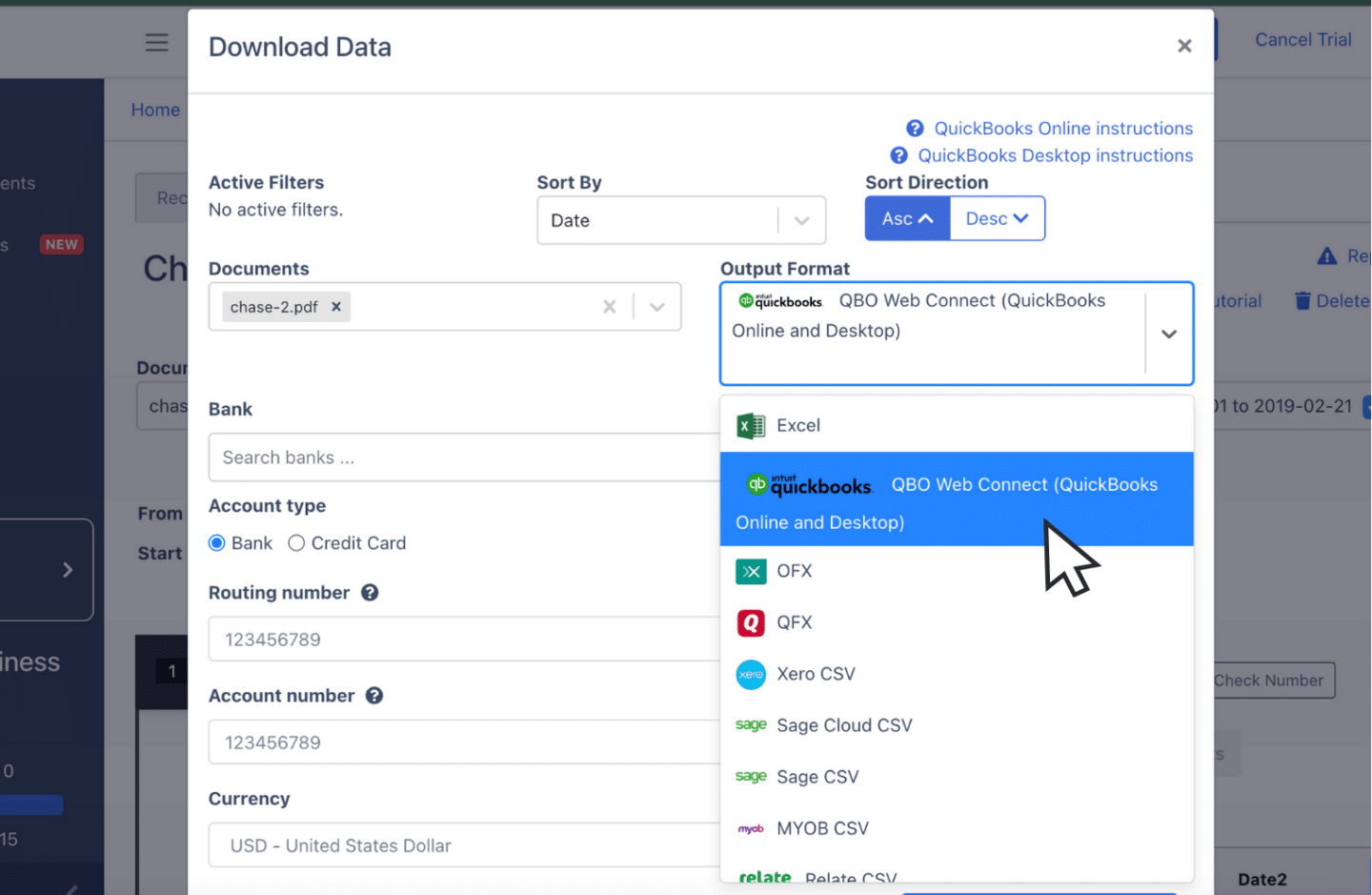
Click Download Data to export.
Export to Excel
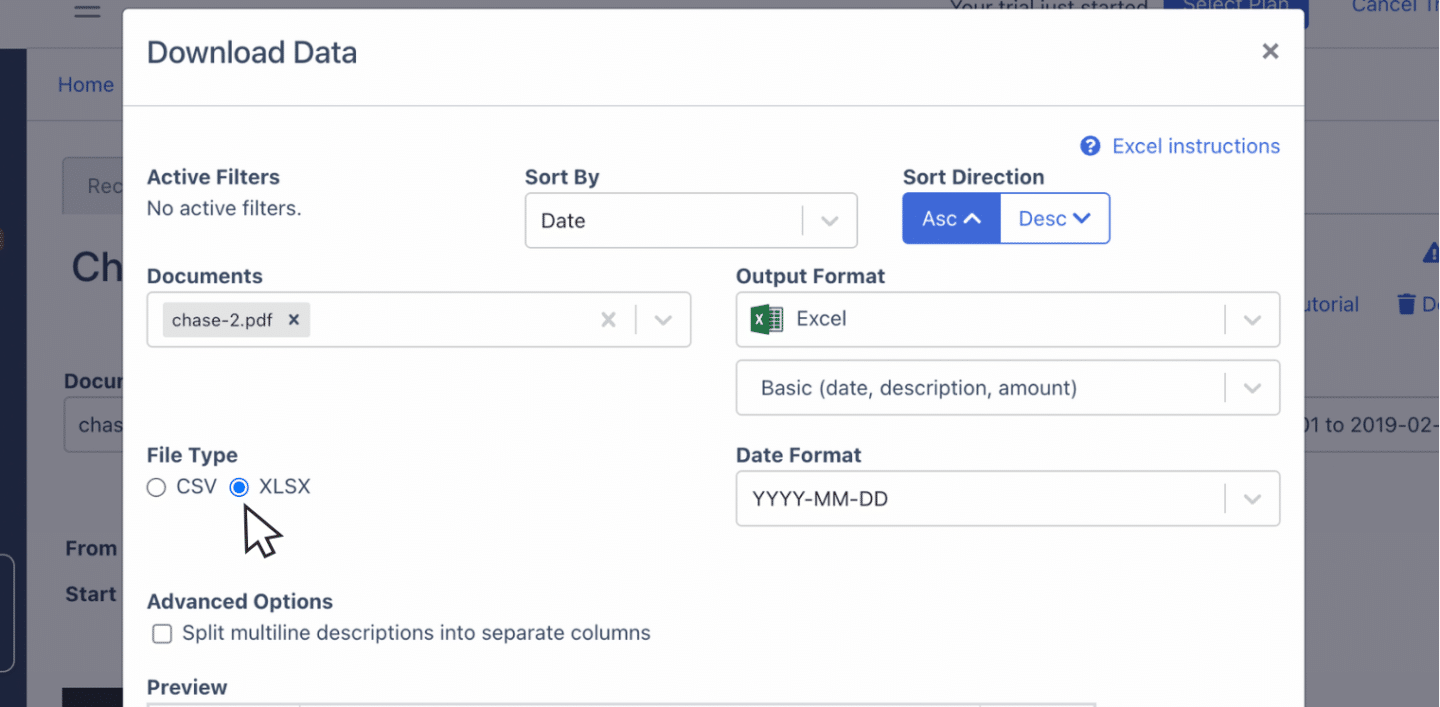
Select Excel and choose XLSX. The file downloads immediately and opens in Microsoft Excel or Google Sheets.
For all banks and statement formats, DocuClipper's bank statement to Excel converter works the same way.
Export to CSV
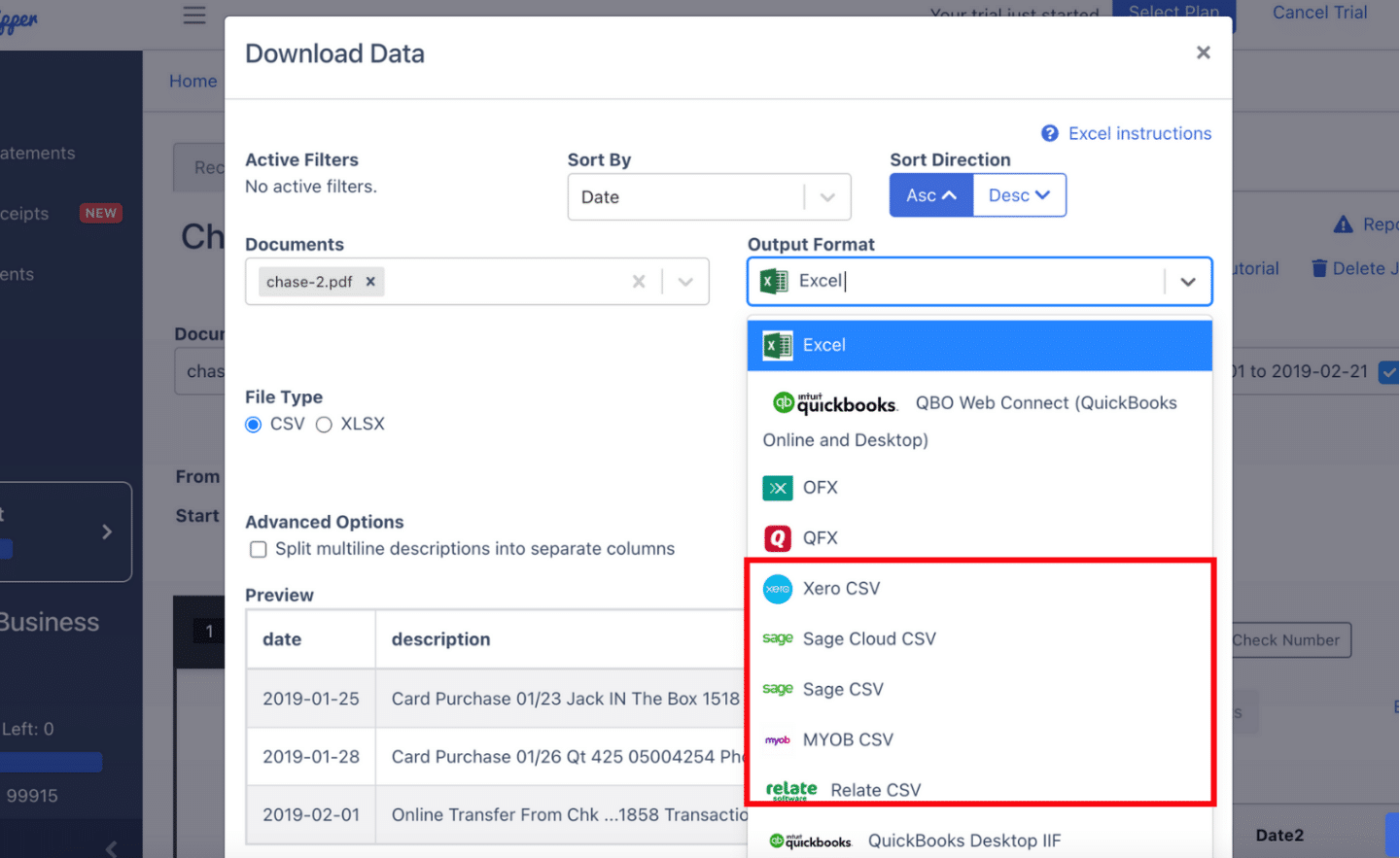
Select Excel then CSV. DocuClipper also provides pre-formatted CSV layouts for Quicken (QFX) or QIF, Xero, Sage, MYOB, and NetSuite.
For a broader walkthrough, see our guide on how to convert bank statements to Excel or CSV.
Export to QBO
Select QuickBooks to generate a QBO file for direct import into QuickBooks Desktop or Online.
For a complete guide to importing bank statements into QuickBooks, see bank statement to QuickBooks.
Also useful:
Put it into practice
Manually copying brokerage data creates reconciliation errors
Cost basis, market value, realized gains: these numbers compound errors when retyped. DocuClipper extracts them directly from the statement so holdings and activity tie out the first time.
How to Download Fidelity Cash Management Statements
Online (fidelity.com):
- Sign in to your Fidelity account.
- Go to Accounts & Trade, then Statements.
- Choose your Cash Management Account and the statement period.
- Click Download PDF to save the statement.
Available history: up to 10 years of monthly statements through the Fidelity portal, depending on account age.
Note: Fidelity Cash Management Accounts are FDIC insured through a network of program banks. Your statement will reflect the partner bank holding the cash balance, but transaction history, debit card activity, and bill pay all show on the Fidelity statement itself.
Why Convert Fidelity Statements with DocuClipper
- Digital PDFs, high accuracy: Fidelity issues clean machine-generated PDFs through its portal, so DocuClipper's OCR extraction is consistently accurate without scan noise.
- Cash and sweep activity captured: Both checking-style transactions and sweep movements are pulled into the spreadsheet, useful when reconciling against brokerage statements.
- All formats covered: Excel, CSV, QBO, OFX, and pre-formatted exports for major accounting platforms.
- Reconciliation built in: Statements are verified against Fidelity's stated balances before you export, catching any extraction gaps before they affect your work.
FAQs about Fidelity Statement to Excel
Can I download Fidelity Cash Management statements as CSV directly?
Fidelity does not offer a native CSV export of full monthly statements. You can download recent activity in other formats from the portal, but those exports do not include the opening and closing balance summary that lenders and auditors expect. DocuClipper converts the full PDF statement into a structured spreadsheet that includes all balance data.
Does DocuClipper work with Fidelity brokerage statements too?
Yes. DocuClipper handles brokerage statements in addition to cash management statements. Brokerage statements include position holdings, activity, dividends, and income alongside transactions. See the dedicated guide: How to Convert a Fidelity Brokerage Statement to Excel.
How far back can I get Fidelity statements?
Fidelity provides up to 10 years of monthly statements through its online portal, depending on how long the account has been open. For older statements, contact Fidelity client services to request them. Once you have the PDFs, batch-upload them to DocuClipper to get a consolidated Excel file covering the full date range.
Can I convert multiple Fidelity statements at once?
Yes. DocuClipper supports multi-file uploads. Drop all your Fidelity PDFs into one batch and download a single combined Excel file, or export each statement individually.
Related Articles
- Bank Statement Converter
- Bank Statement to CSV
- Fidelity Statement Converter
- Brokerage Statement Converter (all brokers)
- How to Convert a Fidelity Brokerage Statement to Excel
- How to Convert Bank Statements to Excel or CSV
- How to Convert Charles Schwab Bank Statement to Excel
- How to Convert Chase Bank Statement to Excel
- How to Convert Wells Fargo Bank Statement to Excel
- How to Convert Ally Bank Statement to Excel
Next step
Convert your brokerage statement: free 14-day trial
Upload any PDF brokerage statement and download Holdings, Activity, and Income in a clean Excel workbook. No credit card required.