
Correcting the Year on Transactions
Bank statements often omit the year on transaction rows. Here's how DocuClipper infers the year and how to fix it when the inference is wrong.
Last updated
Why the year can be wrong
Most bank statements print dates like 03/15 on each transaction row. The year only appears once, at the top of the statement or in the period range, and DocuClipper reads the period to determine the year for every transaction.
If the period isn't recognized (faded scan, unusual layout, missing cover page), DocuClipper falls back to the current year, which often isn't right, especially for statements from prior tax years.
Fixing it
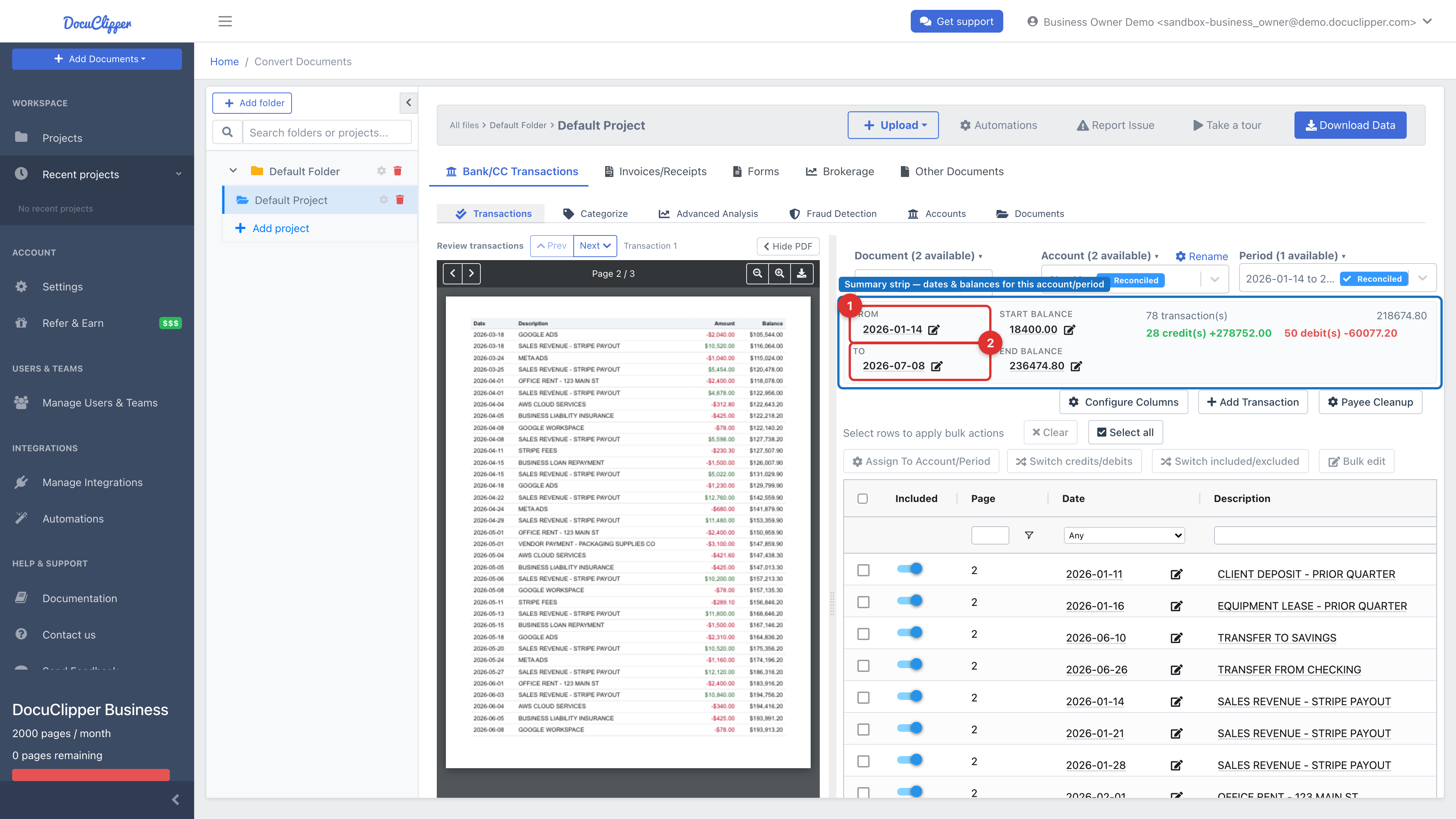
You don't have to edit every transaction. Correct the statement's Start Date and End Date once and the year propagates to every transaction row automatically.
- Open the converted job. Above the transactions table is a summary strip showing Start Date, Start Balance, End Date, and End Balance for the selected account and period. A wrong year is often flagged with a red Bad year warning.
- Click the Start Date value to edit it inline. Enter the correct date in
YYYY-MM-DDformat and press Enter. - Do the same for the End Date.
- DocuClipper re-derives the year for every transaction in that period and refreshes the table.
Multiple statements in one job
If you converted statements across multiple accounts or periods in the same job:
- Use the Account and Period dropdowns above the table to switch between them.
- Fix the Start Date and End Date on each account and period independently.
Editing individual transactions
If only a handful of transactions have the wrong year (e.g. December transactions that belong to the previous year on a January statement), click the date cell on each row and edit the year directly. Changes save automatically.