
How To Import Invoices And Receipts Into QuickBooks Online
Link a DocuClipper project to QuickBooks Online once, then let extracted invoices, bills, and receipts sync automatically — and re-sync whenever you edit them.
Last updated
DocuClipper sends invoices and receipts into QuickBooks Online automatically. You link a project to your QuickBooks company once, and from then on every invoice or receipt DocuClipper extracts is created in QuickBooks on its own — no per-document "Import" click. When you later edit one, DocuClipper updates the same QuickBooks record instead of creating a duplicate.
Step 1: Upload and convert
- Log in to DocuClipper.
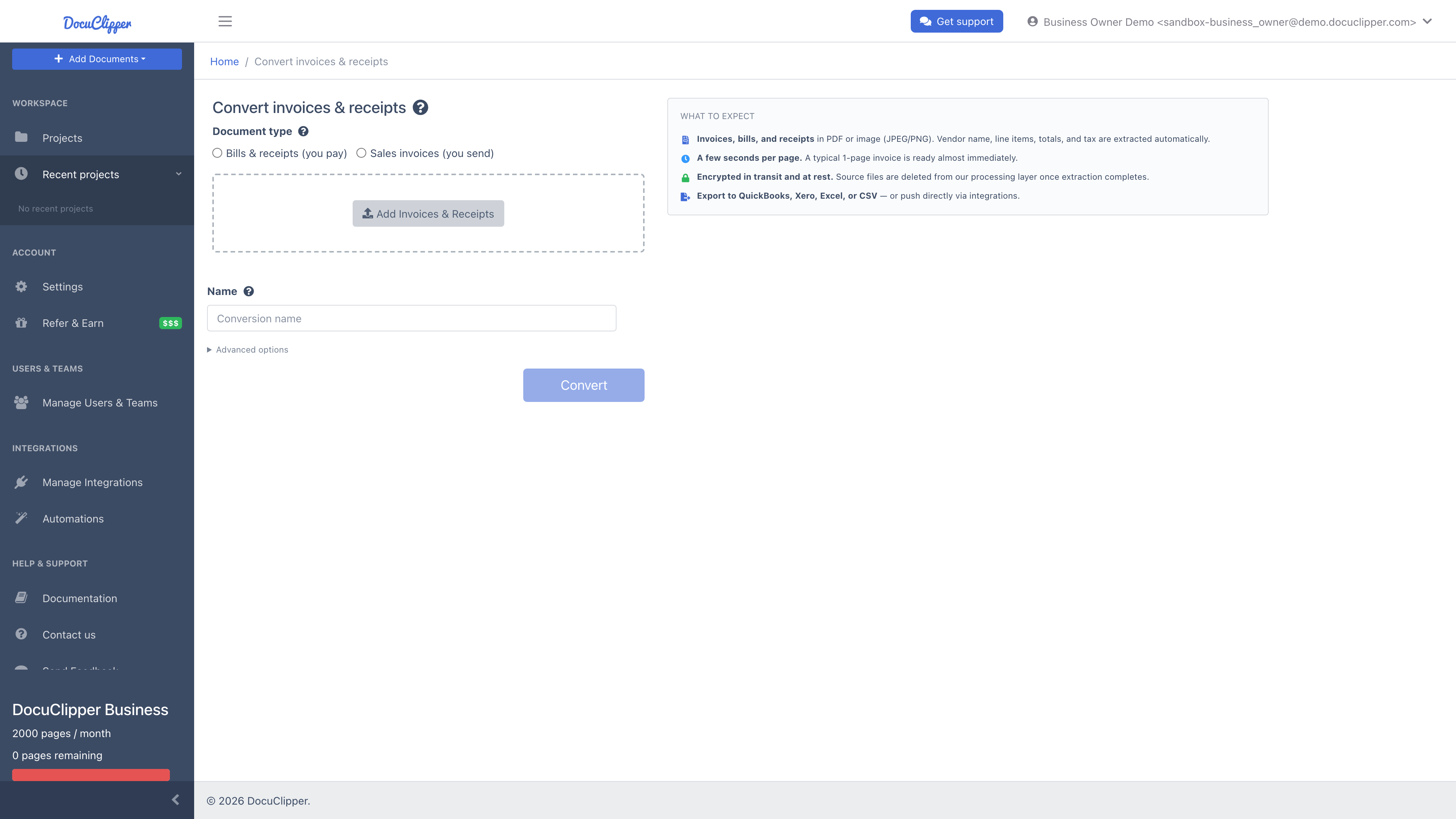
- Open the uploader: click Add Documents in the left sidebar, then choose Invoices, Receipts & POs.
- Upload: drag and drop one or more PDFs or images (JPEG, PNG) of your invoices or receipts.
- Pick the document type: the type you choose here decides what gets created in QuickBooks — a Bill/Expense for a purchase, or an Invoice for a sale.
- Convert: once the upload finishes, click Convert.
Step 2: Link the project to QuickBooks (one time)
Linking is what turns on auto-sync — there is no separate on/off switch.
- Open any invoice in the project to open the invoice editor.
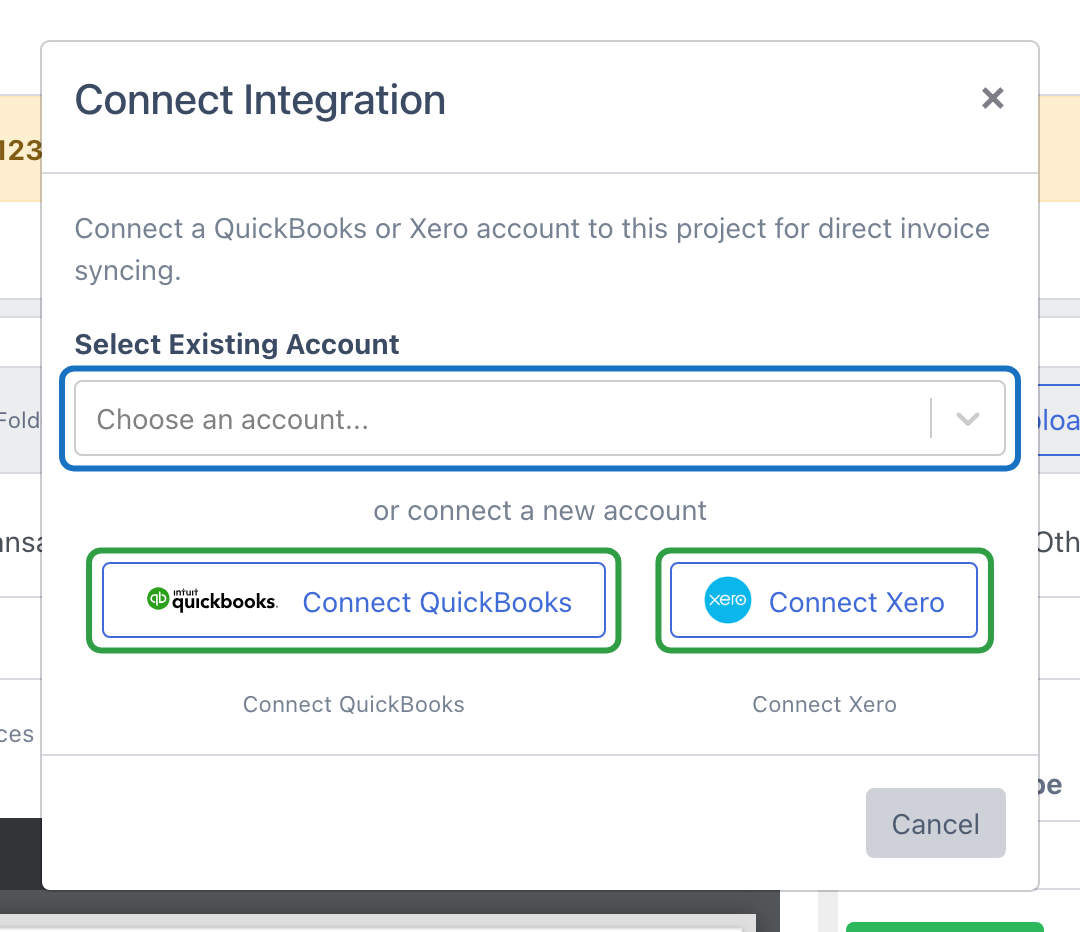
- In the Export & Sync sidebar, click Connect Integration.
- Choose QuickBooks Online and pick the company you want this project to sync to. If you have not connected QuickBooks yet, DocuClipper routes you to log in to Intuit and authorize the connection, then brings you back.
Once the project is linked, every invoice in it syncs to that QuickBooks company. You only do this once per project.
Step 3: It syncs automatically
When extraction finishes, DocuClipper creates each approved invoice or receipt in QuickBooks Online as the matching record — a Bill, Invoice, or Expense — with the vendor/customer, dates, line items, tax, and total already filled in. You do not click anything.
The Export & Sync panel shows the status for each document:
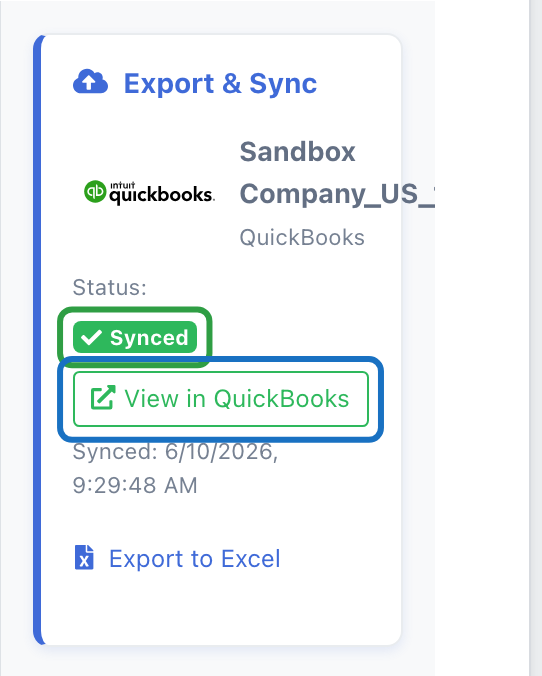
- Synced (green) — created in QuickBooks. Shows a View in QuickBooks deep link and the sync time.
- Not Synced (grey) — ready to sync, waiting on the approval or extraction step.
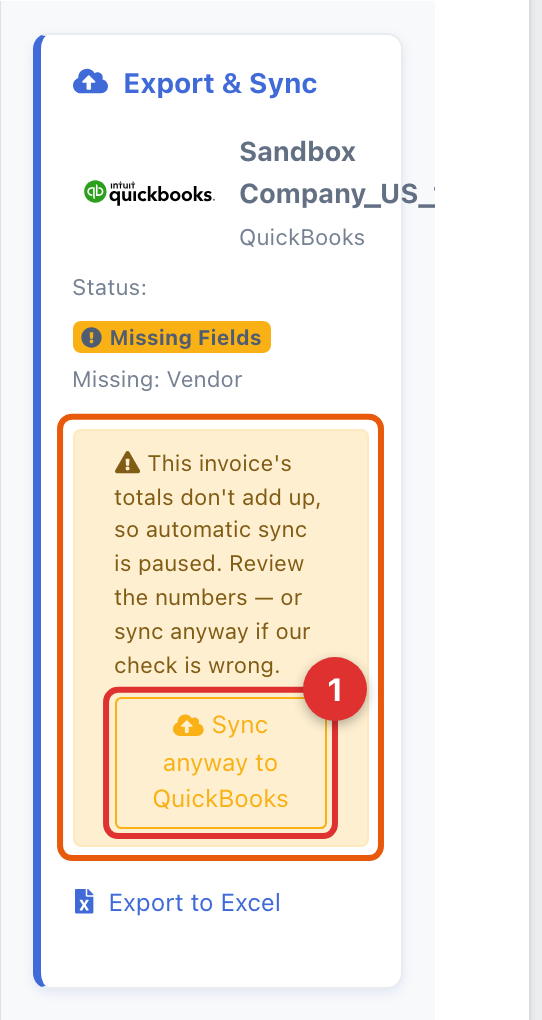
- Missing Fields (yellow) — a required field (vendor, account, or amount) is empty; fill it in and it syncs.
- Error (red) — QuickBooks rejected the record; the panel shows the reason, or a Reconnect button if the connection expired.
Approval gate: if an approval rule applies to the project, an invoice must be approved before it syncs. Purchase orders bypass approval and sync as soon as they are extracted.
Step 4: Edit anything — it re-syncs
Edit a synced invoice — change the account, an amount, the vendor, a line item — and DocuClipper pushes the change to the same QuickBooks record by its id. You never get a second copy.
The vendor/customer, item, account/category, and tax fields are searchable dropdowns that pull live from your connected QuickBooks company, so you map to records that already exist or create them inline.
When an edit doesn't add up
If your edit leaves the totals unbalanced (subtotal + tax ≠ total), DocuClipper pauses the automatic push and shows an "automatic sync is paused" banner in the editor so a wrong number doesn't reach your books. Fix the totals and it resumes on its own — or, if the numbers are correct as-is, click Sync anyway to QuickBooks to override the pause.
What happens when DocuClipper flags a duplicate
DocuClipper checks every newly extracted invoice against your last 90 days of uploads. When it finds another invoice with the same vendor, the same total (within ±$0.01), and a date within ±3 days, it flags the new one with a yellow warning so you can review it before it reaches your books. This flag is informational — it doesn't stop the invoice from syncing.
Open the flagged invoice and confirm whether it's a genuine new bill (the matched invoice has a View in QuickBooks link). If it is, no extra step is needed — it syncs like any other. And if QuickBooks already has that invoice number, DocuClipper automatically links to the existing record instead of creating a second copy, so you can't double-post. (This is separate from the Sync anyway button, which overrides the reconciliation pause when totals don't add up.)
For details:
Where the settings live
There is no auto-sync toggle. Linking the project (Step 2) is the switch. In Project Settings → Invoices you can set an invoice number prefix and a default expense account/account code — the default account helps records pass QuickBooks validation, but it does not turn sync on or off.
Scanning receipts into QuickBooks
Receipts work exactly like invoices — there's no separate flow. Upload them the same way (Add Documents → Invoices, Receipts & POs, drag in one receipt or a whole folder of PDFs and images), and DocuClipper extracts the merchant, date, line items, tax, and total template-free, so a merchant you've never scanned works with no setup.
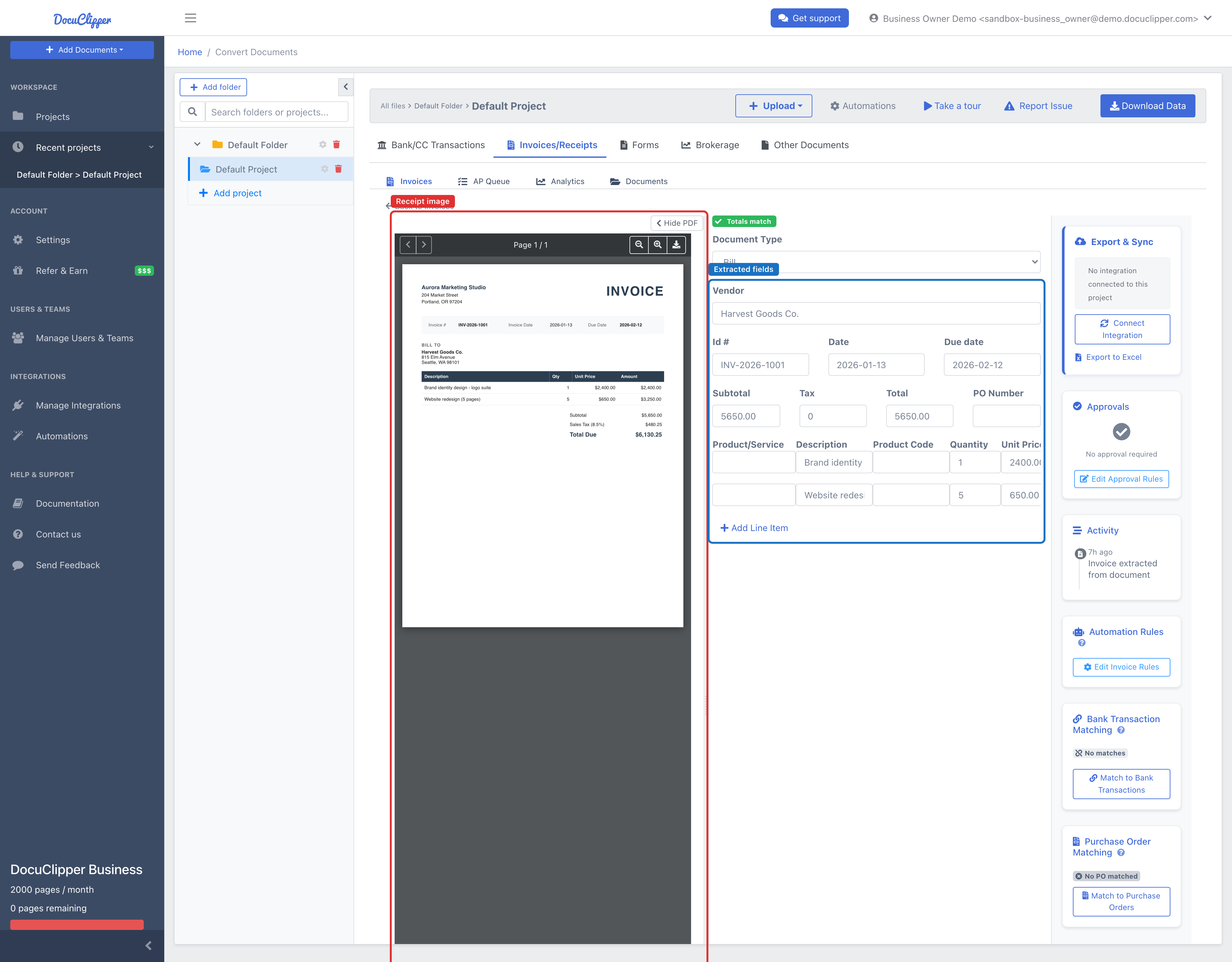
Once the project is linked to QuickBooks (Step 2), each approved receipt syncs on its own — a receipt for a purchase you've already paid typically maps to an Expense, while one you still owe maps to a Bill. Vendor mappings persist just like invoices: once you categorize a merchant, repeat receipts from that merchant come in already coded, so recurring expenses (fuel, coffee, subscriptions) stop needing manual attention. Everything else on this page — the approval gate, edit-and-re-sync, and duplicate handling — applies to receipts too.
Check your records in QuickBooks
Click the View in QuickBooks link on any synced document, or log in to QuickBooks Online and open Expenses (for bills/expenses) or Sales (for invoices).
Note: email support@docuclipper.com if you run into any issues or have feedback.