
How to Import Bank Statement Transactions into Quicken with a QIF File
Step-by-step tutorial: export a QIF file from DocuClipper and import it into Quicken without retyping transactions.
Last updated
Looking for the converter? Convert a PDF bank statement to a QIF file on the Bank Statement to QIF Converter page. This article is the import-side tutorial for Quicken.
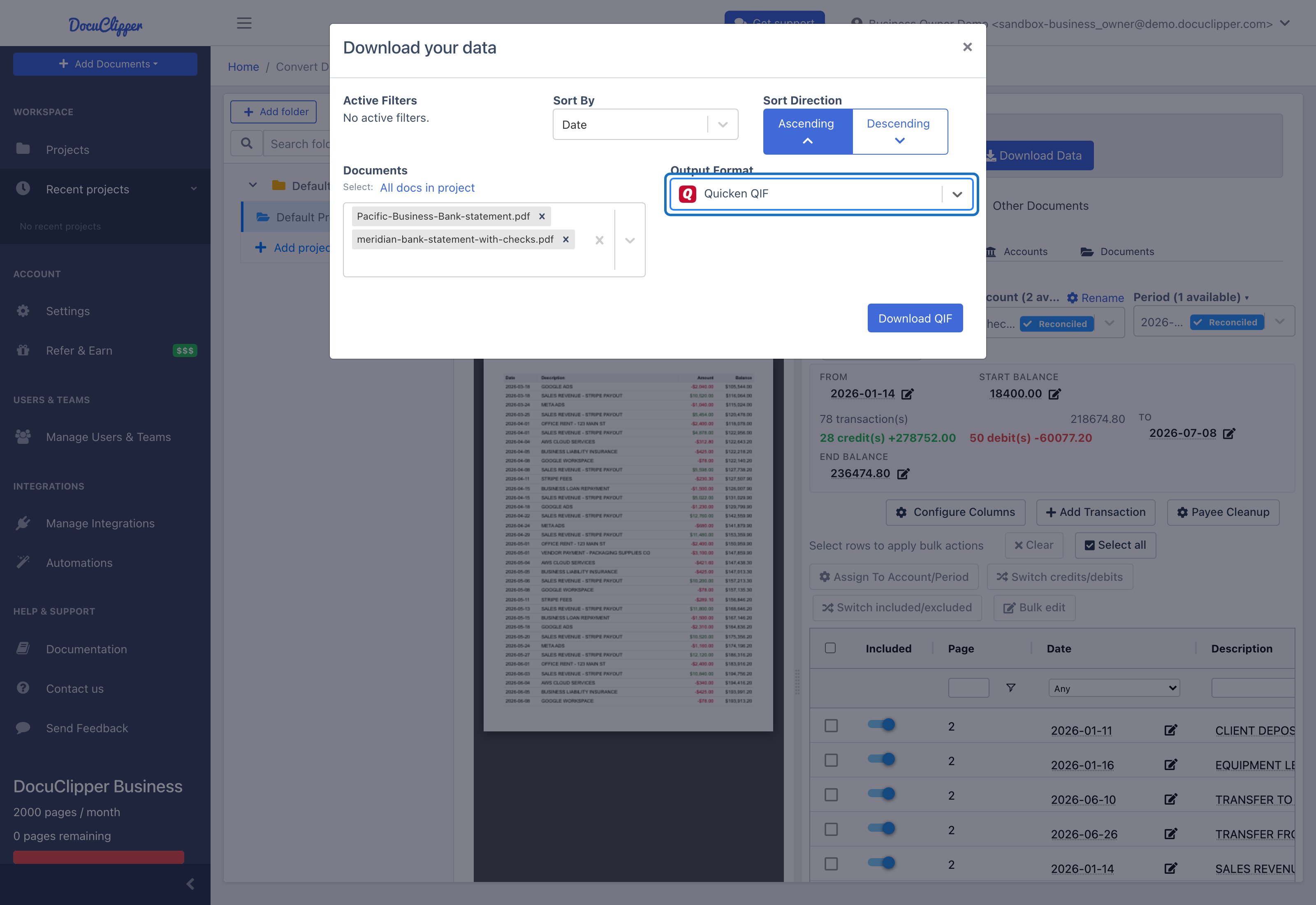
To import a DocuClipper QIF into Quicken, export your converted statement as Quicken QIF from the Download Data dialog, then in Quicken go to File → File Import → QIF File, browse to the .qif, pick the destination account, and click Import.
Use QIF for older Quicken editions or when QBO Web Connect is not an option for the account. Back up your Quicken file before importing because QIF imports cannot be undone in bulk.
How do I import a QIF file from DocuClipper into Quicken?
The process is two steps: download the QIF from DocuClipper, then run a QIF File import in Quicken.
Step 1: Download the QIF from DocuClipper
- Open the project containing your converted statement.
- Click Download Data (above the Summary of Reconciliation).
- Under Output Format, pick Quicken QIF.
- Click Download.
Step 2: Import into Quicken
-
Open Quicken and log in.
-
Go to File → File Import → QIF File…
-
In the QIF Import dialog, click Browse and select the
.qiffile from DocuClipper. -
Choose the Quicken account the transactions should land in.
-
Tick the transaction categories you want to include (usually Transactions is the only one you need).
-
Click Import.
Quicken walks through the file and adds the transactions to the selected account register.
When it's done, you'll see the success summary:
Tips
- Back up first. QIF imports can't be undone in bulk. Use Quicken's File → Backup before running any import.
- Date format. If Quicken complains about dates, check your DocuClipper date format setting matches your Quicken region.
- Duplicates. Quicken dedupes partially on date + amount. Overlapping periods may still produce duplicates, so import non-overlapping ranges when possible.
- Categories. QIF files include the transaction memo/description but not categories. Use Quicken's renaming rules to categorize on import.
FAQs
How do I import a DocuClipper QIF file into Quicken?
Download the file from DocuClipper with Output Format set to Quicken QIF, then in Quicken go to File, File Import, QIF File. Browse to the .qif file, pick the destination account, and click Import.
When should I use QIF instead of QBO Web Connect?
Use QIF for older Quicken editions or when QBO Web Connect is not an option for the account you are importing into. For most modern Quicken setups, Web Connect is the smoother path.
Can I undo a QIF import in Quicken?
Not in bulk. Back up your Quicken file with File, Backup before importing so you can roll back if something goes wrong.
Why does Quicken complain about the date format?
The QIF date format may not match your Quicken region. Adjust the date format setting in DocuClipper before re-exporting.
Will Quicken create duplicate transactions if I import overlapping periods?
It can. Quicken dedupes partially on date and amount, but overlap still produces duplicates in many cases. Import non-overlapping date ranges when possible.
Do QIF files carry transaction categories?
No. QIF exports include the memo and description but not category assignments. Use Quicken's renaming rules to categorize on import.
Related
- Import into QuickBooks Online (QBO)
- Downloading Bank Transactions
- Customize Date Format
- Bank Statement to QIF
If you run into issues, email support@docuclipper.com.