
Understanding Automatic Mode
Automatic Mode converts a statement DocuClipper can't recognize by treating all the text as a generic table: when it happens, why, how to extract a statement with no transactions as a spreadsheet, and how to organize the columns before download.
Last updated
DocuClipper converts scanned and PDF bank, credit card, and brokerage statements into structured formats like CSV, Excel, and QBO. When it can't recognize a statement's layout, it falls back to Automatic Mode so you still get the data out.
What is Automatic Mode?
- When DocuClipper can't recognize the uploaded PDF, it switches to Automatic Mode and extracts every word in the document into a generic table (columns are labeled Col 1, Col 2, and so on).
- Automatic Mode exports to Excel only. Structured targets like QuickBooks and other integrations aren't available for these files.
Why did DocuClipper use Automatic Mode?
Common reasons:
- No transactions. The statement has no transaction rows to detect.
- Unsupported statement. The bank or format isn't recognized. Check the list of supported banks.
- Low quality. A blurry or heavily compressed scan prevents clean extraction.
- Missing headers. DocuClipper needs column headers (date, description, amount, etc.) - at least on the first page - to detect a transaction table.
Statements with no transactions
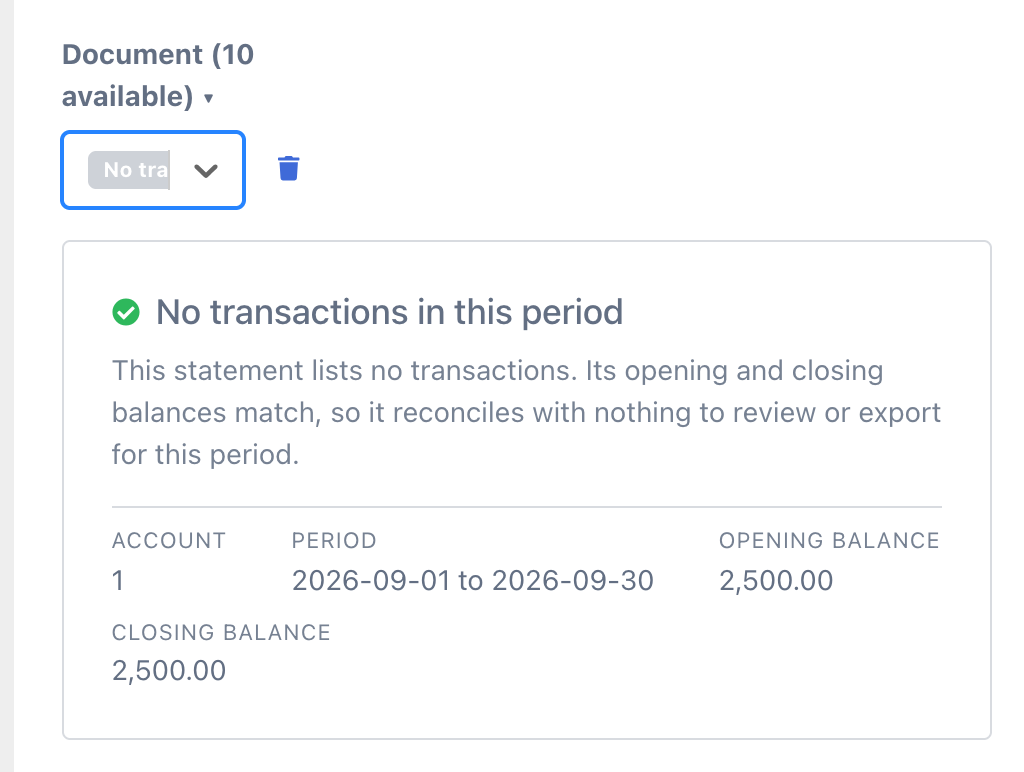
A bank statement with no activity in the period, or a summary-only statement, has no transaction rows, so DocuClipper keeps it in the project and marks it No transactions instead of switching it to Automatic Mode. What you see when you select it under Bank/CC Transactions depends on whether its balances check out.
"No transactions in this period"
When the statement's opening and closing balances match, it reconciles with zero transactions: the account simply had no activity. In place of the transactions table, DocuClipper shows No transactions in this period with the account, the statement period, and the opening and closing balances, so you can confirm it against the PDF. There is nothing to review or export for that period.
"No transactions found"
When the statement has no transaction rows and its balances don't confirm that (for example, no printed balances, or balances that differ), a banner under the Document dropdown gives you two options:
- Report a problem: tells our team the statement should have had transactions. The button changes to Reported once we have it.
- Extract as spreadsheet anyway: reads every word on that one statement into a generic table, the same way Automatic Mode does. Other statements in the project keep their transactions.
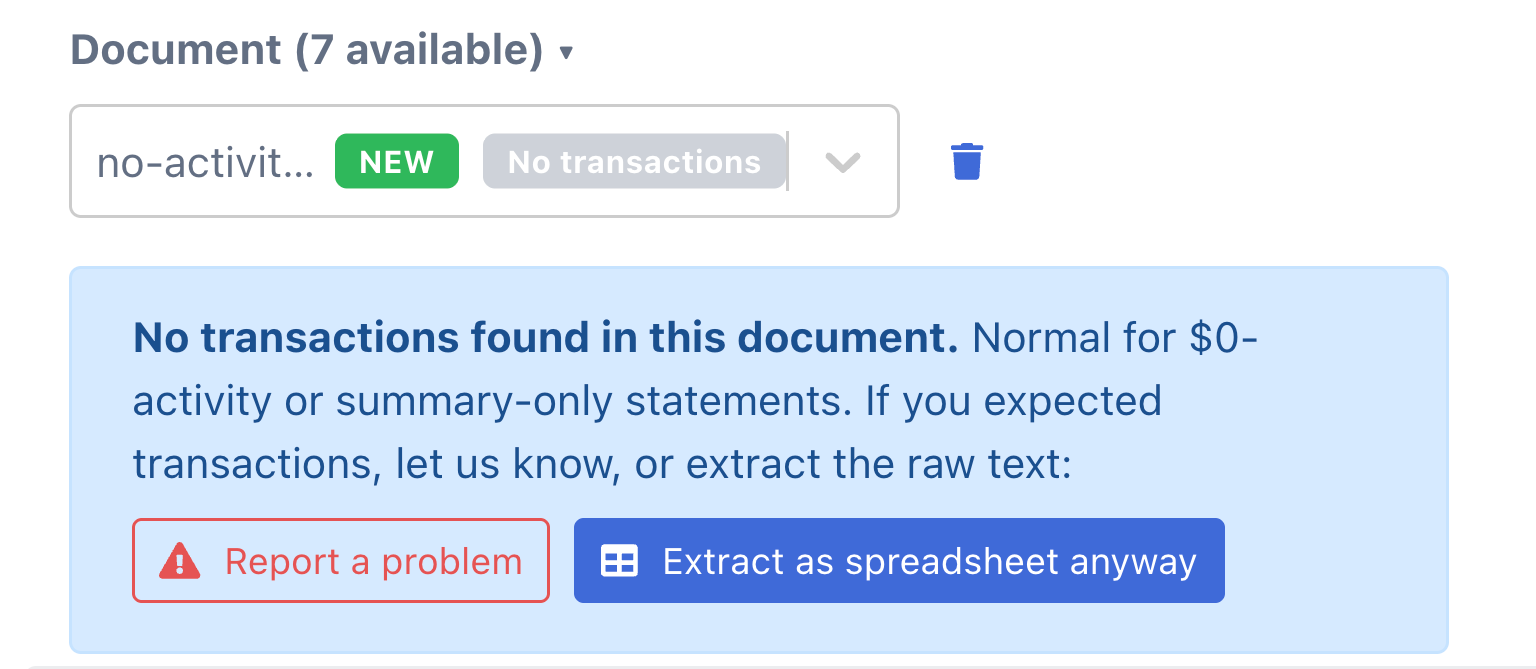
After you click Extract as spreadsheet anyway, the button shows Extracting… while the statement is read again. You can stay on the page or switch to another document. When it finishes, the page updates on its own and a message with an Open Automatic Data link appears. The statement's text is under Other Documents > Automatic Data, where you can organize the columns and download it.
How to avoid Automatic Mode
- Check the file before uploading. Confirm the scan quality, that headers (date, description, amount) are visible, and that transactions are present.
- Upload through the right option. In the left sidebar, click Add Documents and choose Bank/CC Statements (PDF) for statements, or Other Documents for invoices, receipts, and custom layouts.
- Use a Custom Template for unsupported banks. Under Other Documents, build a custom template that maps the columns yourself. See the Custom Template instructions.

Organizing the columns before download
Automatic Mode still lets you download to Excel, but since it captured every word, you'll usually want to tidy the generic columns first:
- Resize columns by dragging their edges, and rename the Col X headers to match the data underneath.
- Use Preview to check how the file looks before downloading.
- Click Download.
Note: Email support@docuclipper.com if you run into issues or have feedback.