
Integrations
Import Bank Statement Transactions into Sage
Export bank statement transactions from DocuClipper as a Sage-ready CSV and import them into Sage or Sage Business Cloud Accounting.
Last updated
DocuClipper exports bank-statement transactions as a Sage CSV (or Sage Cloud CSV) file that can be imported directly into Sage Accounting or Sage Business Cloud Accounting without any manual cleanup.
Step 1: Download the Sage CSV
- Open the project containing your converted bank statement.
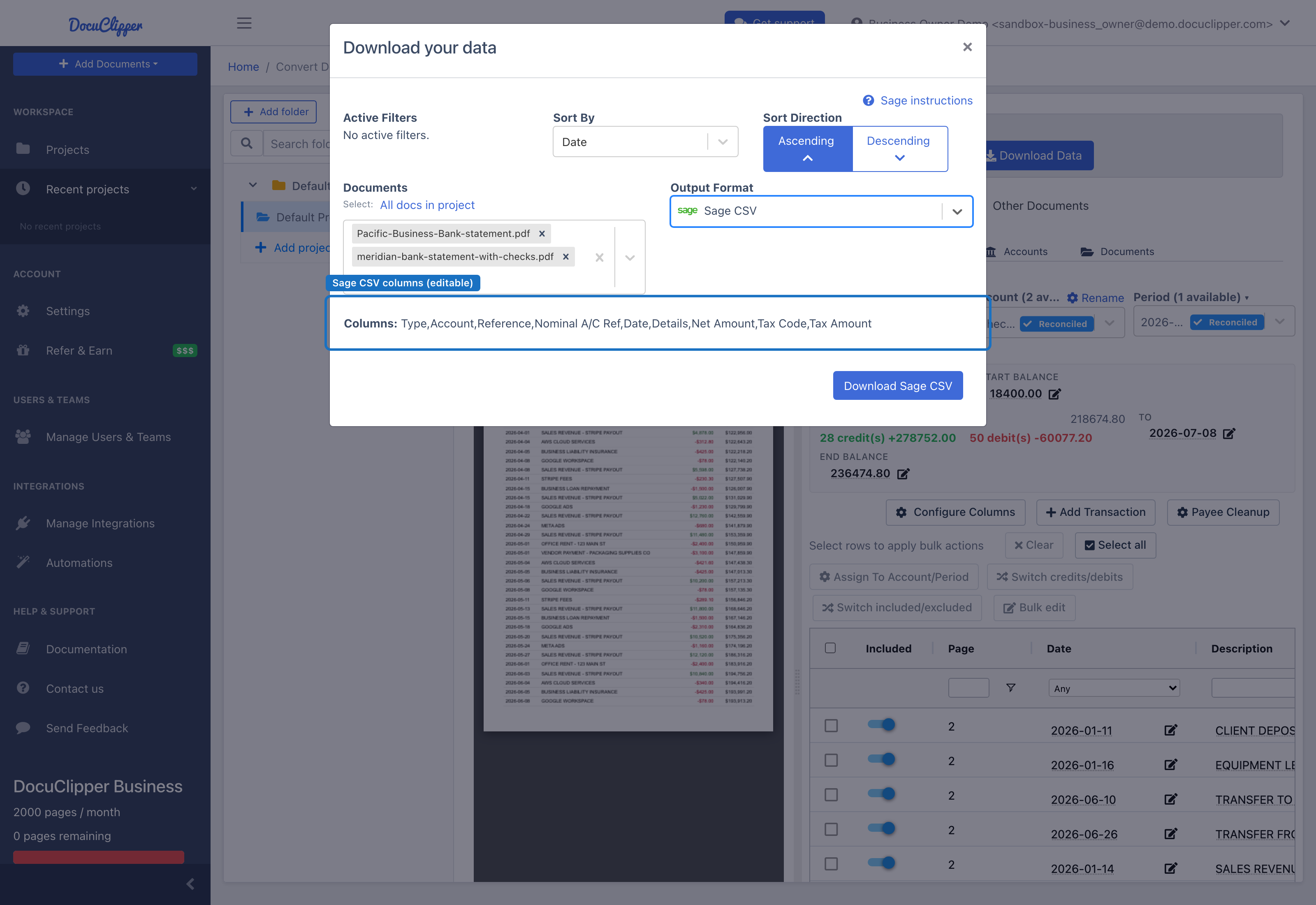
- Click Download Data (above the Summary of Reconciliation).
- Under Output Format, select Sage CSV (desktop Sage) or Sage Cloud CSV (Sage Business Cloud).
- Optionally rename or toggle columns in the column list. The defaults (date, description, amount, balance) are what Sage expects.
- Click Download.
Step 2: Import into Sage Business Cloud Accounting
- In Sage, go to Banking → the bank account you want to import into.
- Click Connect bank → Upload a statement.
- Upload the CSV you just downloaded.
- Sage will show a mapping preview. The default DocuClipper export already matches Sage's expected columns (Date / Description / Money In / Money Out or a single Amount column), so you can accept and continue.
- Review and confirm. Transactions land in your reconciliation queue.
Step 2 (alternate): Import into Sage 50 / Sage Desktop
- In Sage 50, go to Bank Accounts → select the account → Bank Feeds → Import Statement.
- Pick CSV as the format.
- Upload the DocuClipper CSV and walk through Sage's column-mapping dialog.
Tips
- Date format. If Sage complains about dates, open Customize Date Format in DocuClipper and switch to UK (DD/MM/YYYY) or US (MM/DD/YYYY) to match your Sage org.
- Duplicate handling. Sage deduplicates on date + amount + description. If you re-import the same period, Sage will skip anything it already has.
- Large statements. If you hit Sage's per-import row limit, split the CSV by month and import in batches.